Destroy Our Future Is Reclaiming Their Future - A Conversation with DOF
Interviewed and written by Anita Folchini Loughlin
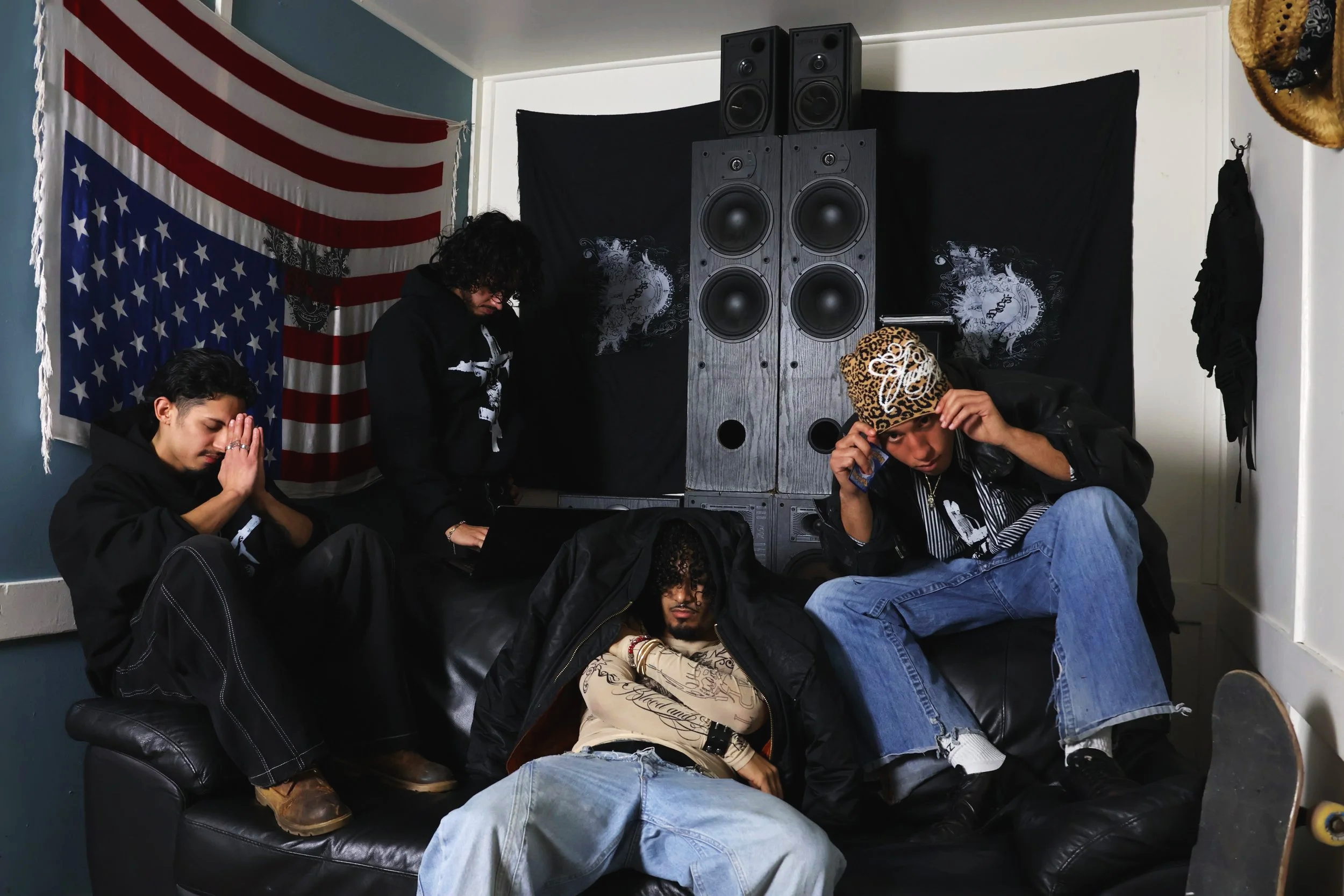
Upon entering its studio, Destroy Our Future communicates more than words ever could. You are greeted by stacked speakers inspired by chucheros, a coat-of-arms design printed on an upside down American flag, a sombrero vaquero de paja hung on the wall, and a black couch that anchors the room. This atmosphere welcomes you into the space where Latin culture is celebrated and actively practiced.
Founded by Hector Rivera and Jefferson Andrade in 2024, Destroy Our Future (DOF) is a Boston-based clothing brand blending diasporic influences drawn from Hispanic and Caribbean traditions with spiritual symbolism that confronts faith, identity, and power. The brand is rooted in an unwavering commitment to reclamation of self while reimagining Boston’s creative scene as a cultural capital rather than an afterthought.
HECTOR RIVERA - The origins of where I came up with that started when I was studying abroad in Italy for a couple of months in 2023. During that time in my life, I felt like I had lost a lot. A lot of personal relationships had ended, and creatively, I felt like I had to transform myself or sort of undergo renewal.
HR - I felt as though experiencing a new culture, especially one that’s very heavily influenced by the spirituality that I grew up with, which is Catholicism, allowed me to create my own relationship with it. I came back to the US, and I felt like I needed to do something to reinvent myself.
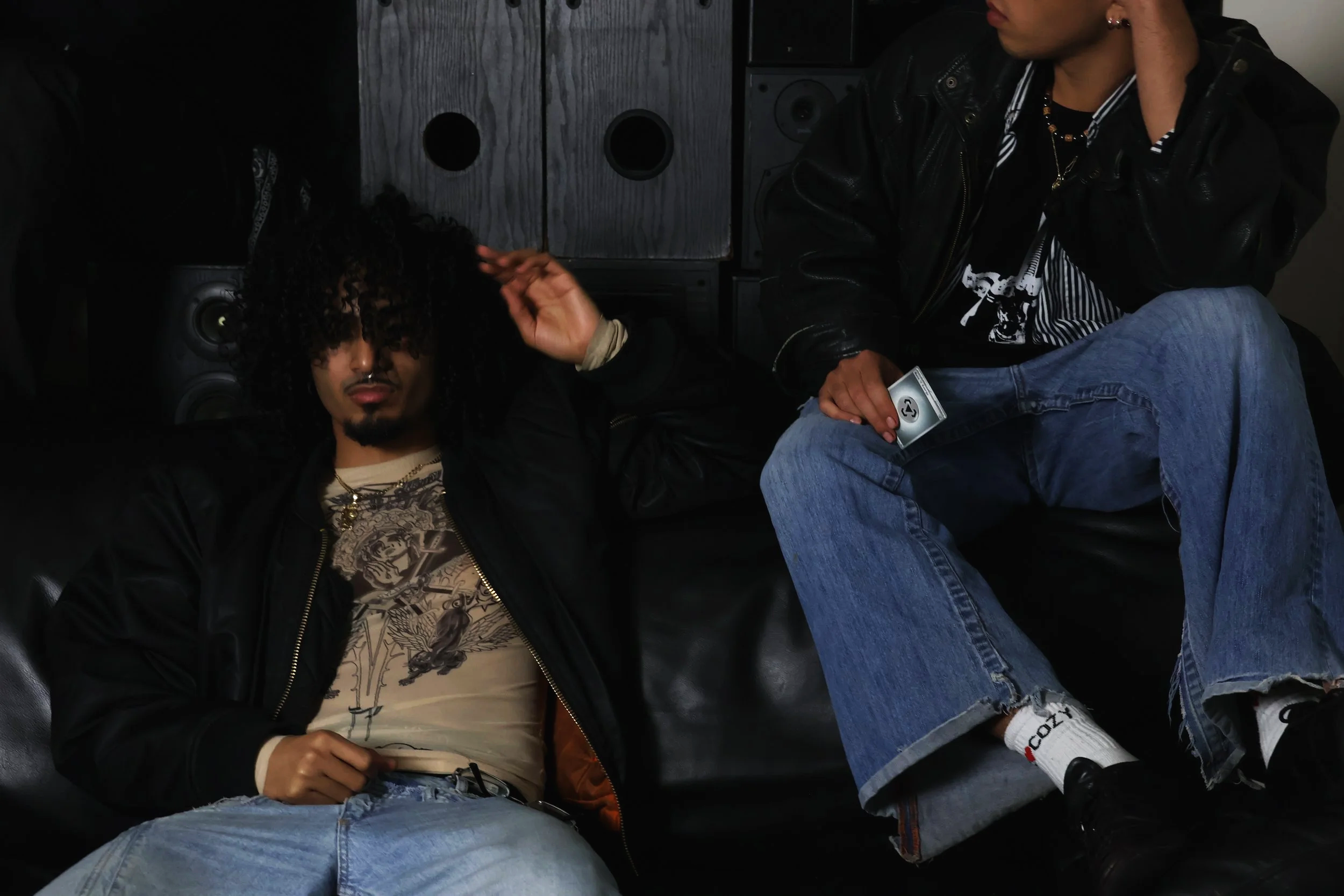
After getting two dermal piercings on his face, Rivera explained that coming from a “very rigid community” within Hispanic culture, people struggled to understand his shift in self-expression and judged him for it.
HR - Instead of wallowing in that self pity, I was like, “No, I’m going to reclaim my decisions. I’m going to reclaim my body, the power that I have in my choice to do whatever I want with myself.” I felt that creating an identity out of that could help me concentrate on that effort more. So many people are oppressed and have to suffer the misfortune of having their bodies, their speech, their voices, controlled. Whether it's Black and Brown people, LGBTQ people, there's so many people who suffer under that ideal. I wanted to focus on that principle of reclamation. That's where Destroy Our Future came in.
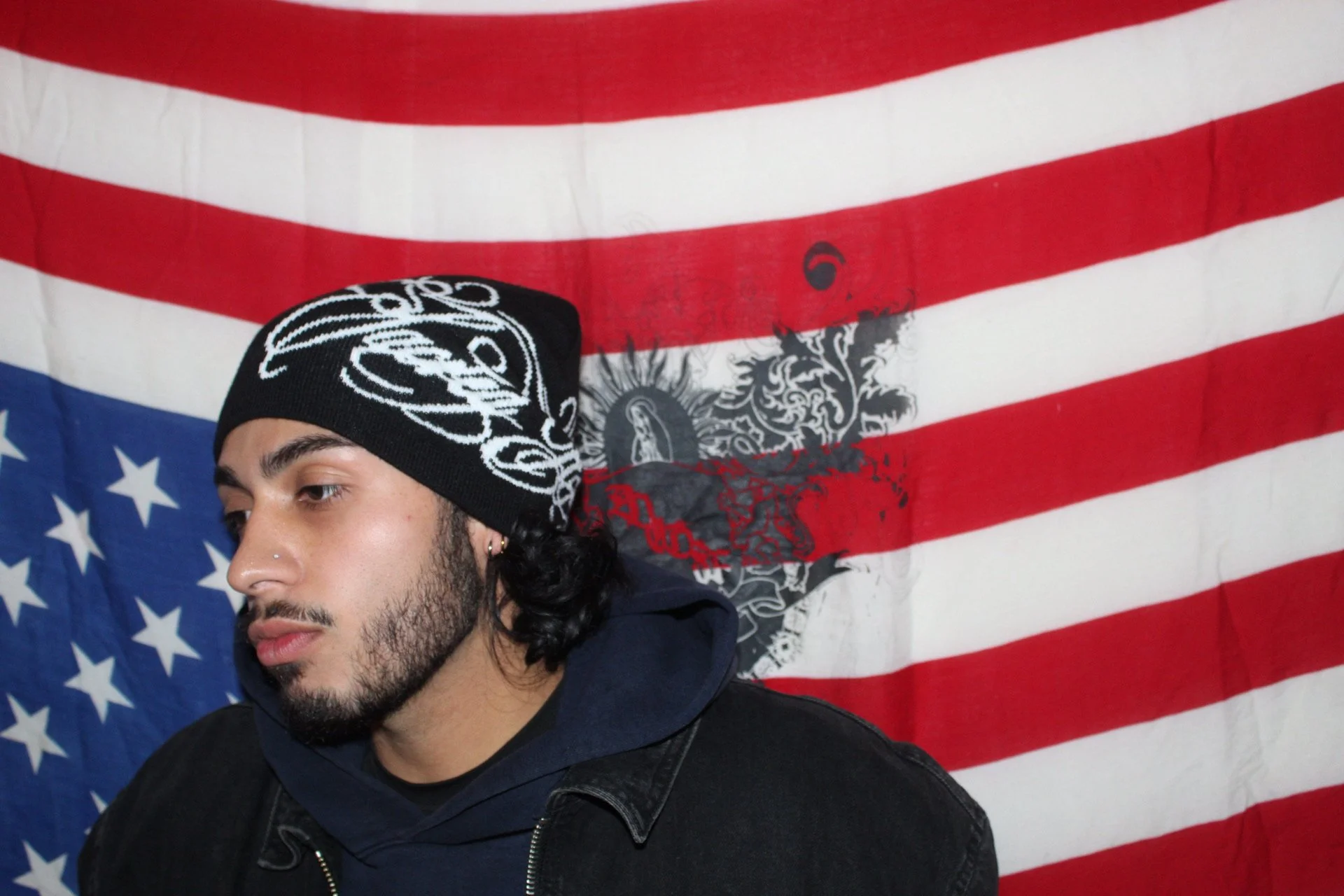
Rivera began designing clothes with his current business partner, Jefferson Andrade, back in 2020 under a different brand called NXGHTMAR3 (Nightmare).
JEFFERSON ANDRADE - We were all fairly new to having our clothing line. It started with screen-printing because we didn’t know the technicalities behind making a tech pack or pattern making.
JA - It was honestly a struggle to initially get into it, screen printing requires a shit-ton of steps that have to be pretty much perfected. Although, looking back on those designs now, we came a long way.
JA - We’ve grown so much since then, even to this day I feel like we’re still learning. Initially it was just me and Hector, he’s the Creative Director, and I manage more of the business aspects of the brand. This year, we officially recruited our connections onto the team, which would be Malachi and Felix.
Malachi Abraham Roth-Cohen, producer of the team
MR - I work on the end of helping connect us with other people… looking for things, looking for people, trying to figure out where our budget is for certain shoots and videos, and helping set up.
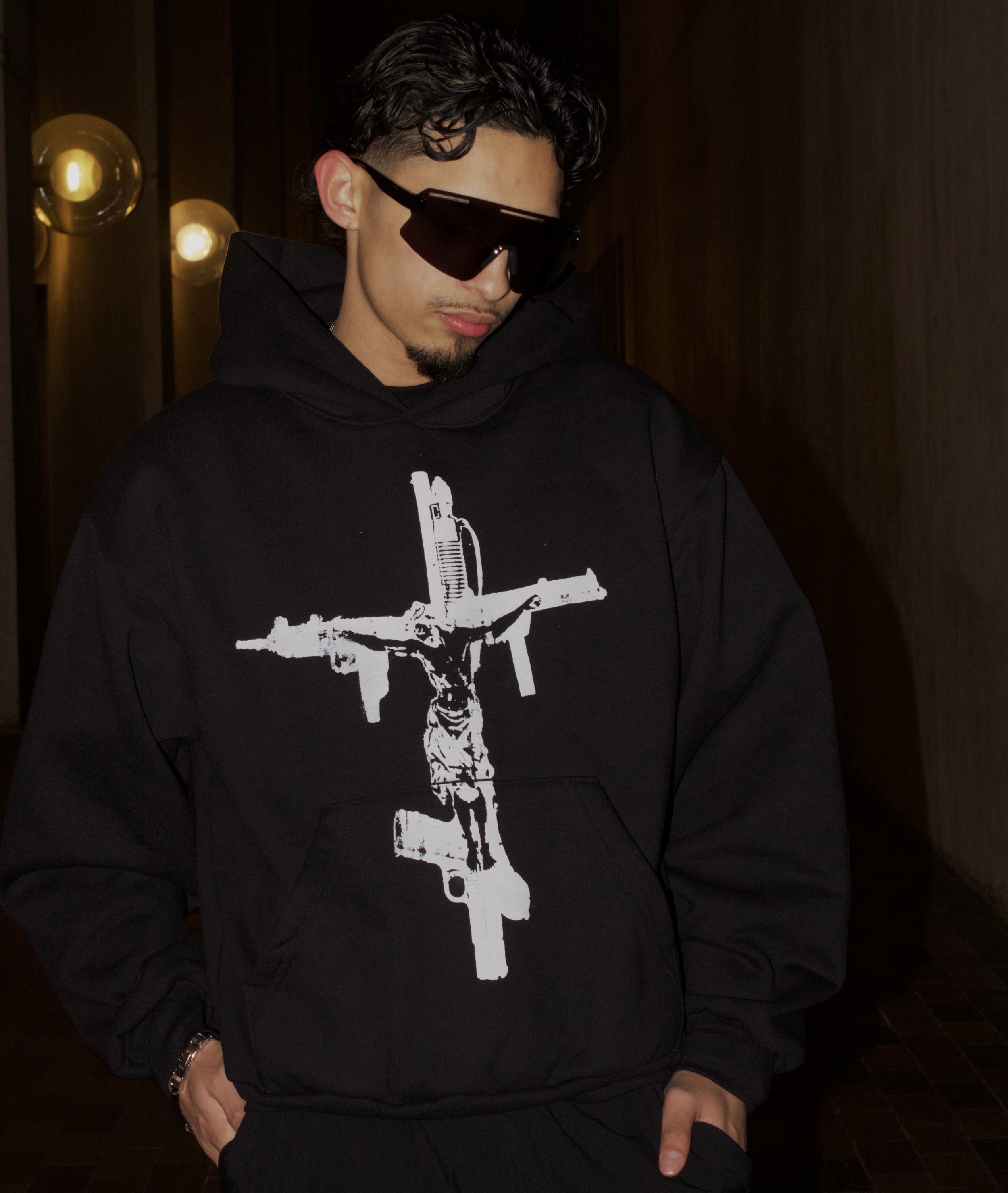
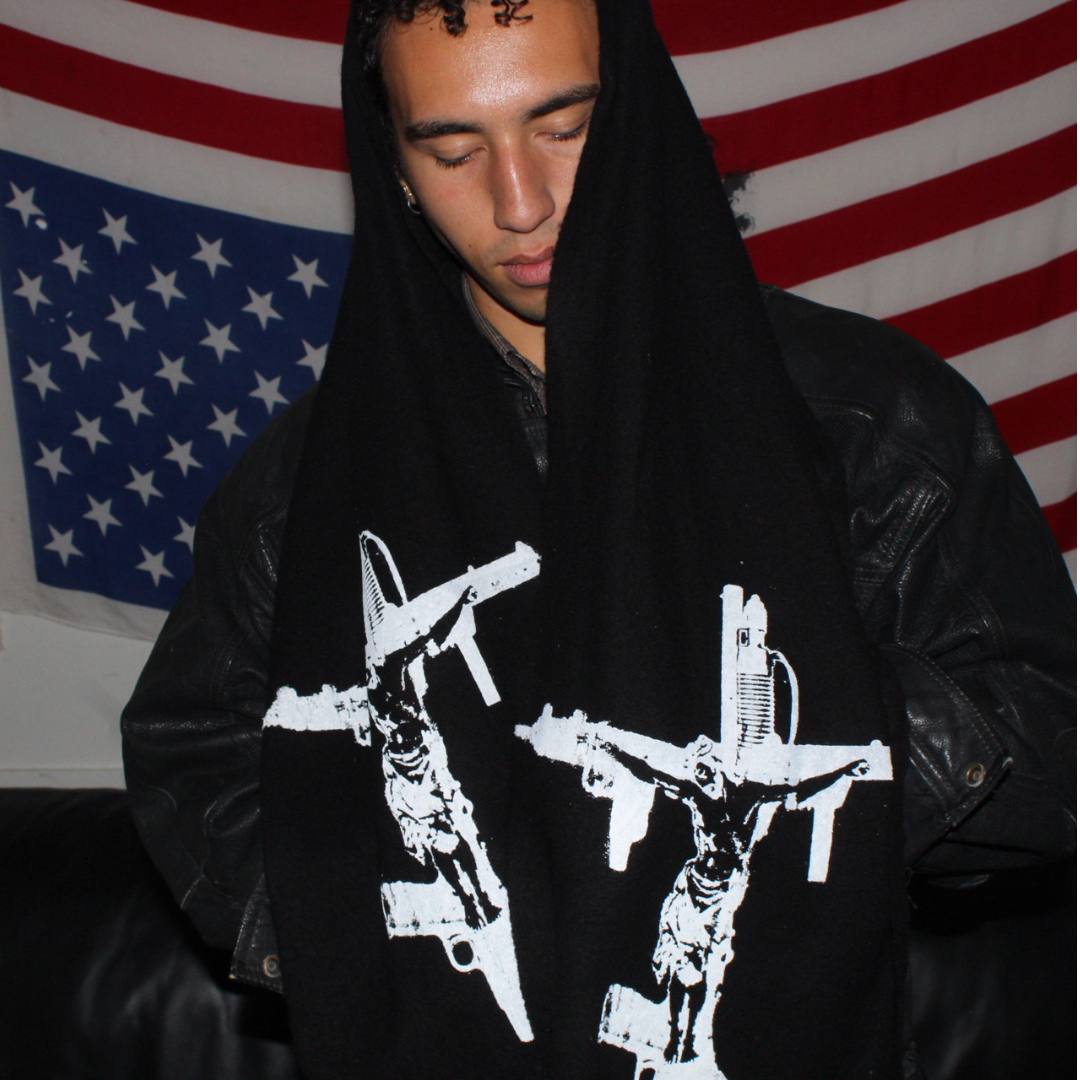
Felix Hernandez, photographer of the team, wearing “Crucifix Hoodie”
FH - One day I got a camera as a gift and started experimenting with it, and that’s when I started falling in love with my photography. We all talked about it and they gave me the opportunity to not only build myself but to also help them. It’s definitely something I'm still learning as we grow not only for myself but for them as a team. Seeing the whole process and seeing everyone grow individually and together, it’s really all love at the end of the day and I’m proud to work with them.
A typical day of production for the team involves compartmentalizing time with a structured schedule. “We set up, we plan out, we look over the designs, our goals.” Rivera explained.
Rivera emphasized that while running a business, “Yeah it can be luck, or it can be creativity, but a lot of the time it’s just figuring out the right steps, making the right designs, and figuring out your algorithm for whatever platform,” he added.
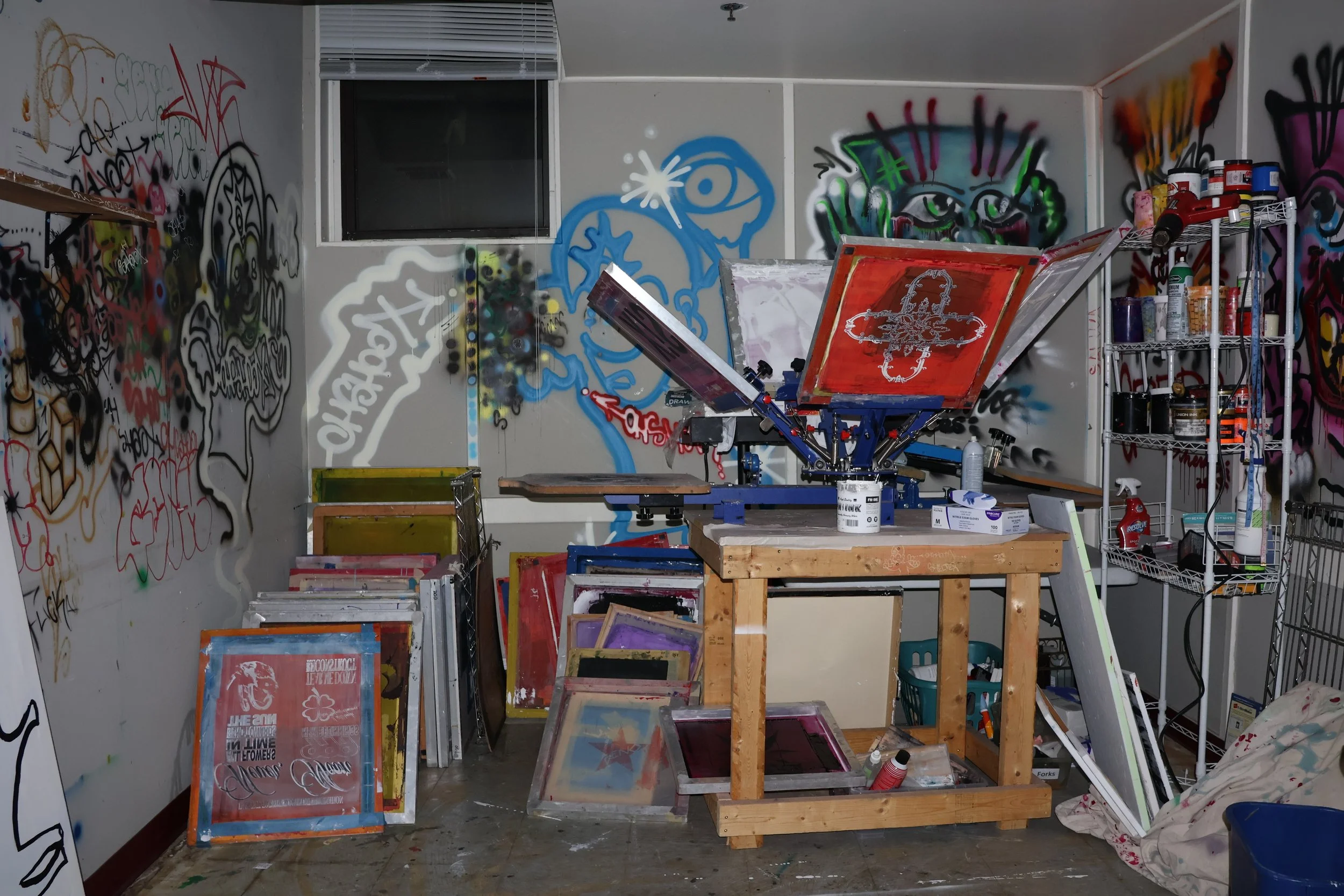
DOF Studio - Screen printing room. Photo by Anita Loughlin.
HR - We’re still figuring that out. I’d say for a production session, sometimes we’ll have seven people here at once.
JA - Yeah, it’s pretty crazy, but some days are a little bit more chill.
JA - It’s funny because we have to balance this out with our regular lives, you know. We have the brand, but then we also have our full time jobs and income or school. So the production for this is dead ass coming out of work to the studio.
HR - I’m mainly designing or drawing — so wherever I decide to go that day, I’m probably sitting down sketching, making drafts, organizing stuff, fighting with my computer when it’s not cooperating with me. My work travels with me. When I am working, sometimes I have to use my hour lunch break to do what I can.
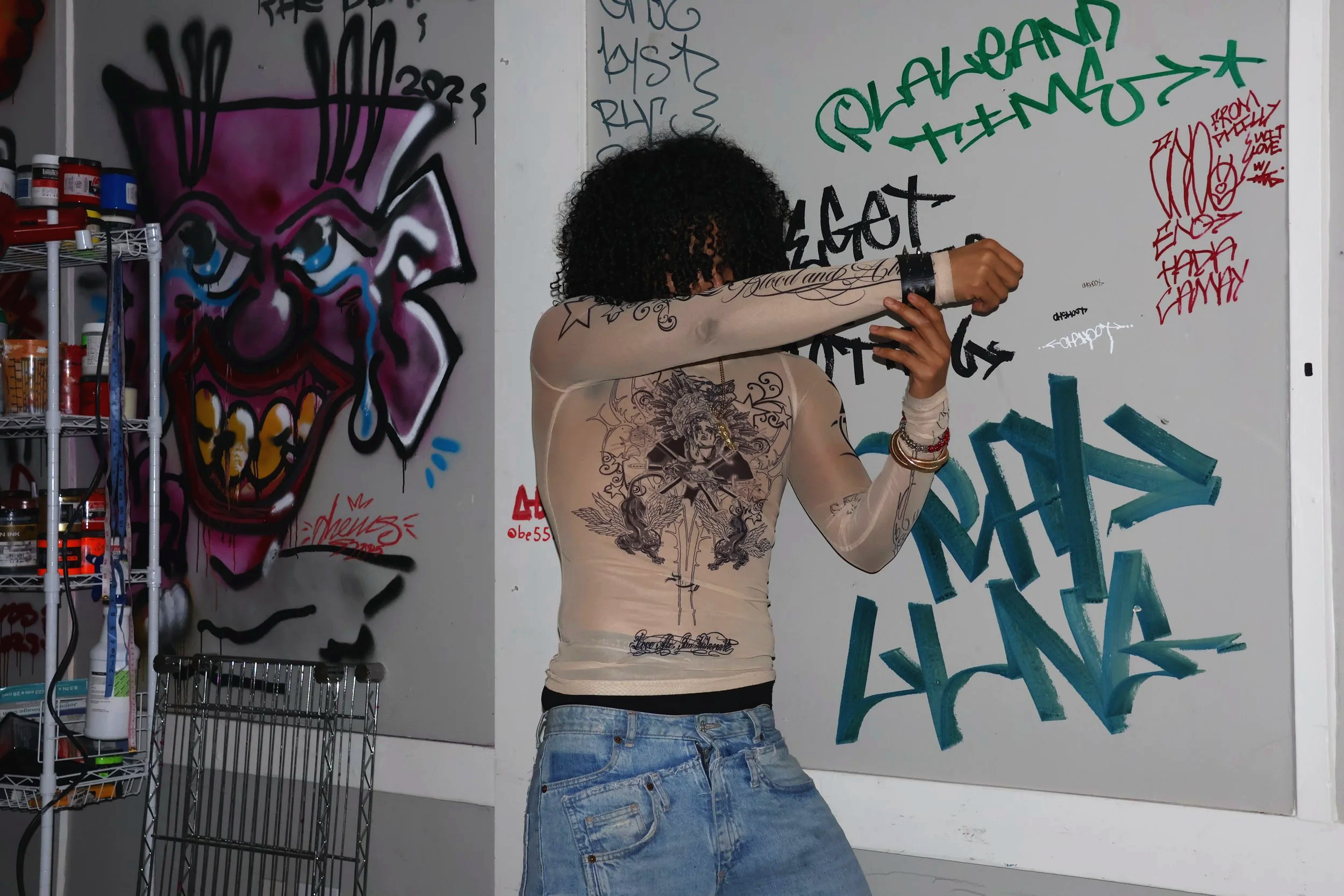
Hector Rivera, wearing “Sacred Heart Tattoo Shirt” in screen-printing room. Photo by Anita Loughlin.
Spiritual symbolism is prevalent and heavily intentional in the designs of Destroy Our Future. The “Crucifix Hoodie” and the “Sacred Heart Tattoo Shirt” in particular, which are both featured in their newest collection titled, Sacred Heart, include the elements of rosaries, crosses, and various religious figures.
What does that mean to you and where does the inspiration for it come from?
HR - My art has always had religious undertones, and more personally, I have always had a very difficult relationship with my faith. I never really agreed with a lot of the rhetoric that I'd hear from my peers, my community, my church, or even my family. It’s always been homophobia, racism, justified under, “It’s what God wanted. It’s just what the Bible says.”
When it comes to my interpretation or my story telling of the cross, I feel like it’s always tying back to my faith that I still do have... But it’s also a cultural thing. The Rosary is a very Hispanic thing, sometimes they carried that when they came here.
The Sacred Heart in catholic religion represents the heart of Jesus and his unprecedented love for humanity.
With violence against Hispanics and immigrants, many being Catholic and being very devout individuals, and how their faith is being weaponized against them to justify their violence, and their oppression, and deportation, I felt like this was the appropriate time to push this imagery out.
It’s also just edgy. It’s provocative, and it needs to be striking. I feel like that's my way of protest.
Are your concepts influenced by any specific music, politics or pop culture?
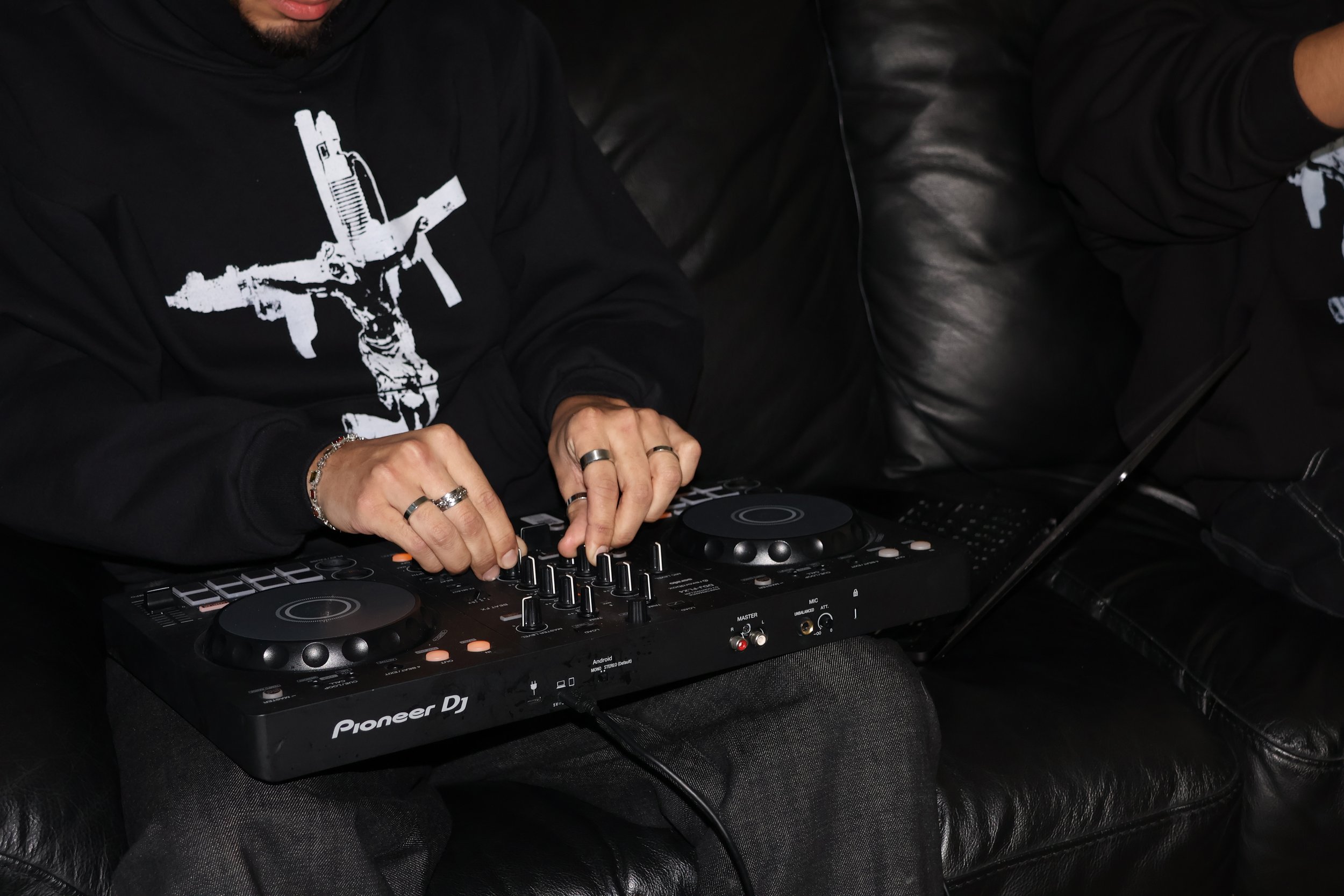
Jefferson Andrade playing some bangers in DOF studio. Photo by Anita Loughlin.
JA - I would personally say hip hop, latin music, and also techno as of recently. Techno is cool as fuck. [Music] has been playing a part in our brand a lot lately… I’ve been getting into DJ-ing as well. I just have fun with it though.
HR - Fashion has everything to do with politics, art has everything to do with politics. All of us being here, has everything to do with politics.
“Despite us coming from vastly different places around the world, we’re all in the same place now. That’s because of politics. I use art and design to express that.”
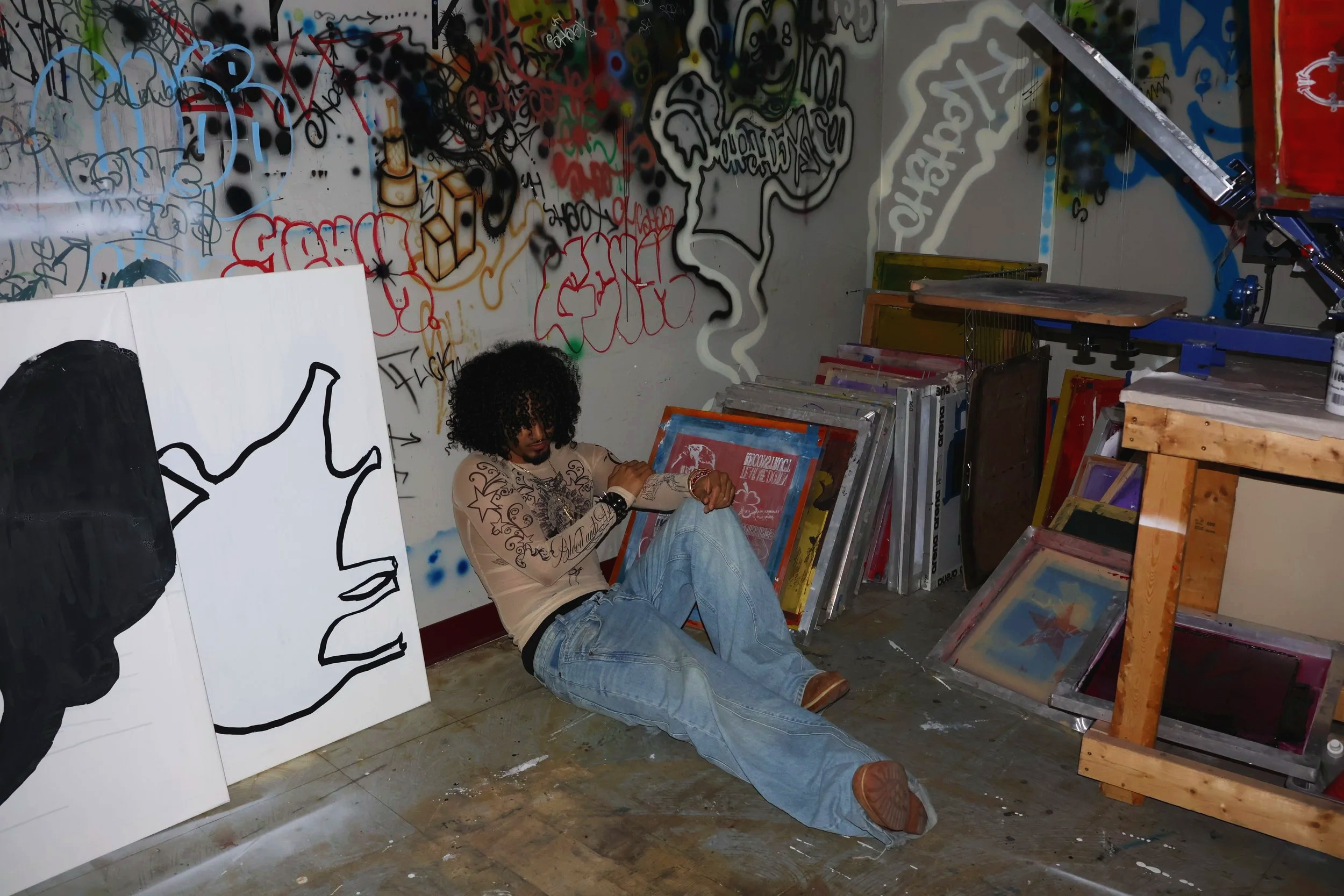
Hector Rivera in screen printing room. Photo by Anita Loughlin.
What do you want your audience to feel when they put on one of your pieces?
JA - I want them to feel swagged the fuck out. We’re doing our best to make sure that it looks cool, because that’s one of the most important things. We also want to empower people and make them feel seen with what we do. We want it to be very inclusive towards a lot of different crowds, and there’s a lot of meaning behind everything we produce.
What do you want people to understand about the brand that they would usually miss?
“It’s for the people. People wearing our clothes can come from any background, they can be from anywhere — have any upbringing. At the end of the day, there’s that kind of cumulative culture.”
JA - A lot of people that are Christian or Catholic see our designs and may feel offended, but we come from Catholic backgrounds as well. I’d like people to know that it comes from love if anything.
HR - I want people to know that despite [DOF] being from a very Latin focused perspective, the ultimate message is inclusion. It’s about sharing, it’s about creating a space for people.
FH - For anyone out there, for whoever is going to see this and listen, showing love and support to little businesses and anyone in general is very important.
“I think the world needs to work together more, showing support is free — it doesn’t cost anything. ”
Can you describe a little bit about what each decorative piece means in this room?
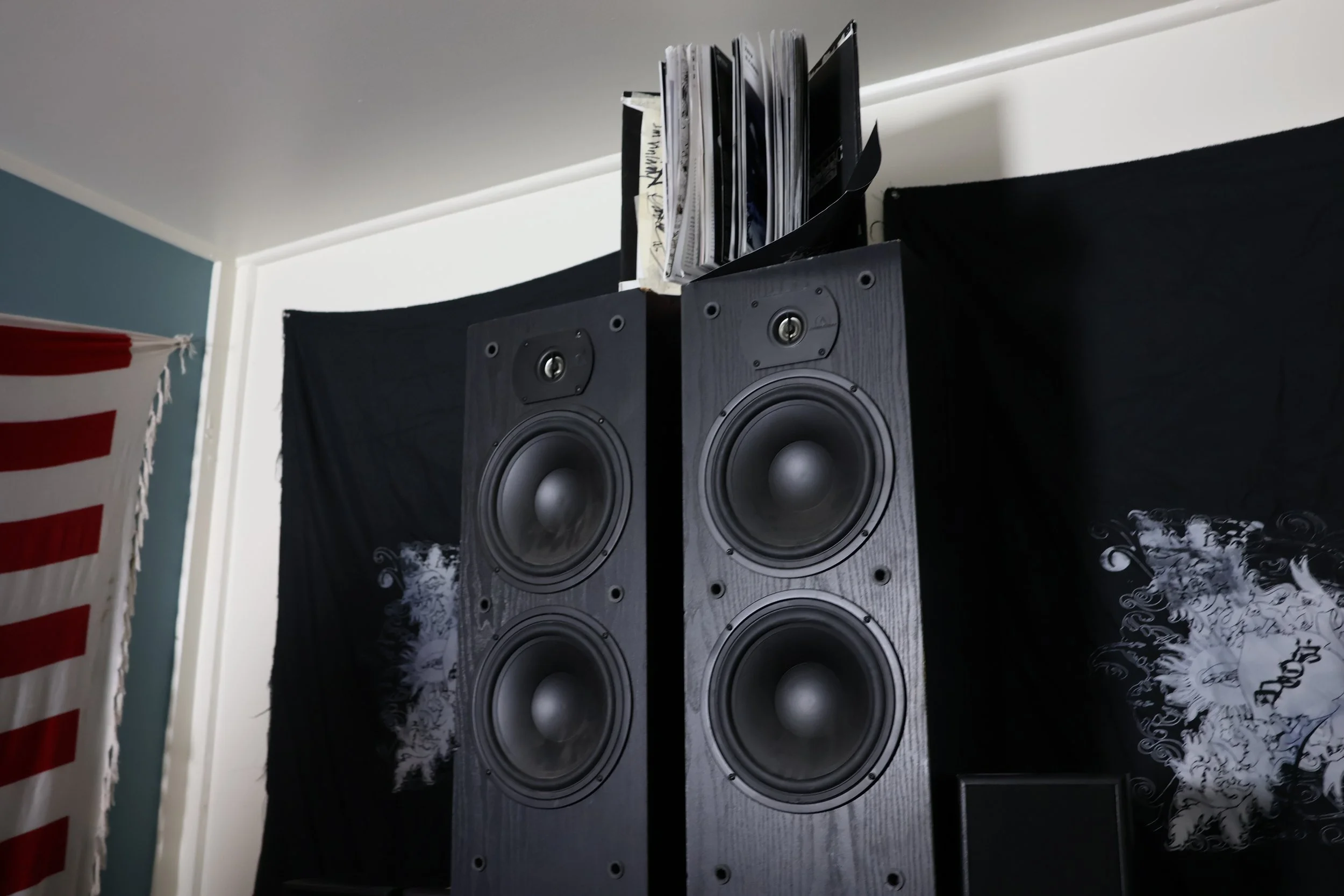
Rivera points to the speaker set up.
HR - The speaker set up is inspired by Eastern Hispanic culture. There’s this thing called puntos where people will drop a random location, literally coordinates, and it’ll be a car meet with people blasting music like a party. If that gets shut down, then it’ll be like “next location is this spot.” Oh that gets shut down? “Next location is this spot.”
I would always see these really large speakers, blasting bass all the way to one hundred fifteen percent, girls dancing on cars. It's so fucking ghetto, but I love it. I love it so much. It's also like a very Caribbean thing, they do that all the way in DR and PR. I'm sure other cultures do it as well. Jefferson and I, we were like delinquents for a whole summer. Summer 22, it was every other day that we were going to a punto.
Roth-Cohen points to Rivera.
MR - You got the speakers. We went on a grand search for these speakers, it was a month long process.
Originally we were trying to find a chuchero kind of bigger than this for a shoot. There was one day where we had a team meeting, and I’m like “Bro we just need to slide into a punto and just start asking people if they’ll let us use their car,” and Jeff, on his phone, pulled it up immediately saying “there’s a punto tonight.” We were all kind of sitting there in silence for a second, they were like “Should we really do it?”
I wanted to see it for myself. So we pulled up, and it was exactly as they described. People were dancing, people were on the sidewalk chilling, some people were smoking, people were trapping. It had such warm feelings even though most people in this circumstance or condition would be like, “That’s the hood, I’m scared.” But people wanted to talk, people were asking for photos. It was nice. As long as you’re not getting up to anything, everybody is friends, everybody is community.
JA - You’ll catch parents with their children out there.
MR - And every single car out there was a different culture, you would hear funk, you’d hear dembow, you’d hear all types of shit.
HR - What was really funny by that last time we went, I feel that we kind of outgrew that vibe a little bit. People were looking at us saying, “Yo, Aventura come over here!” They were looking at us like, “Those dudes are kind of fresh, but they still look kind of ridiculous.”
JA - That’s where the inspiration comes from for the speakers. Obviously we weren’t able to get a chuchero in here, we had to settle for stacked speakers, which is kind of a trend.
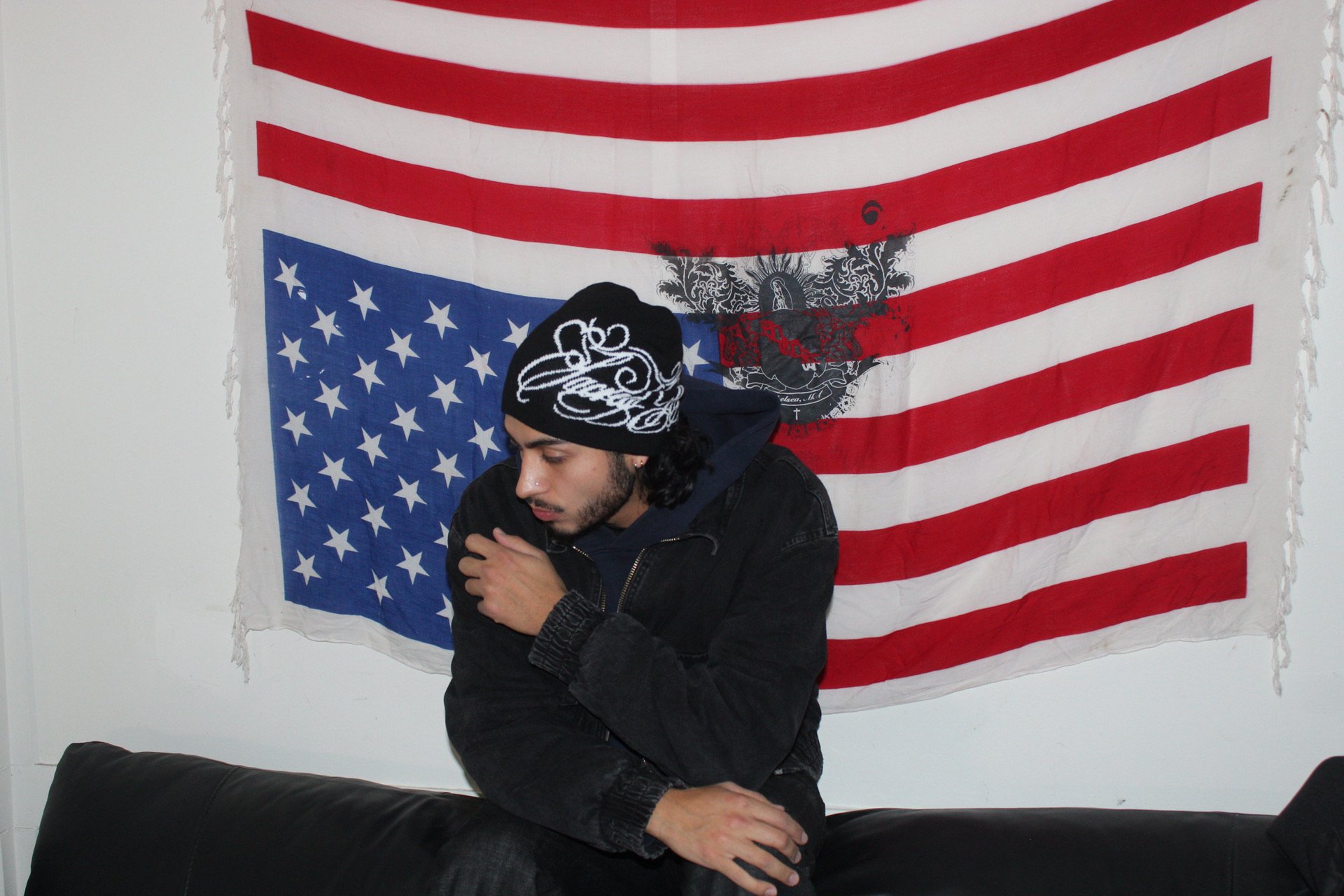
Andrade points to the American flag.
JA- Hector got this flag, he thrifted it and we put a print on it.
HR - Every nation has a war flag right? It’s always with a coat-of-arms, which is a symbol that they put on it to signify the origins of their nation and how it was founded.
So, in a sense, I want DOF to be its own culture with its own spirituality, with its own nation and philosophy. The symbol itself is essentially supposed to be like a very extreme sort of tattoo-esque version of what a family crest would look like.
There's two jaguars, and that represents my indigenous ties and my spiritual ties to my indigenous heritage. I'm Honduran and I'm Puerto Rican.
Photo courtesy of DOF team.
Andrade points to the vest and the hat.
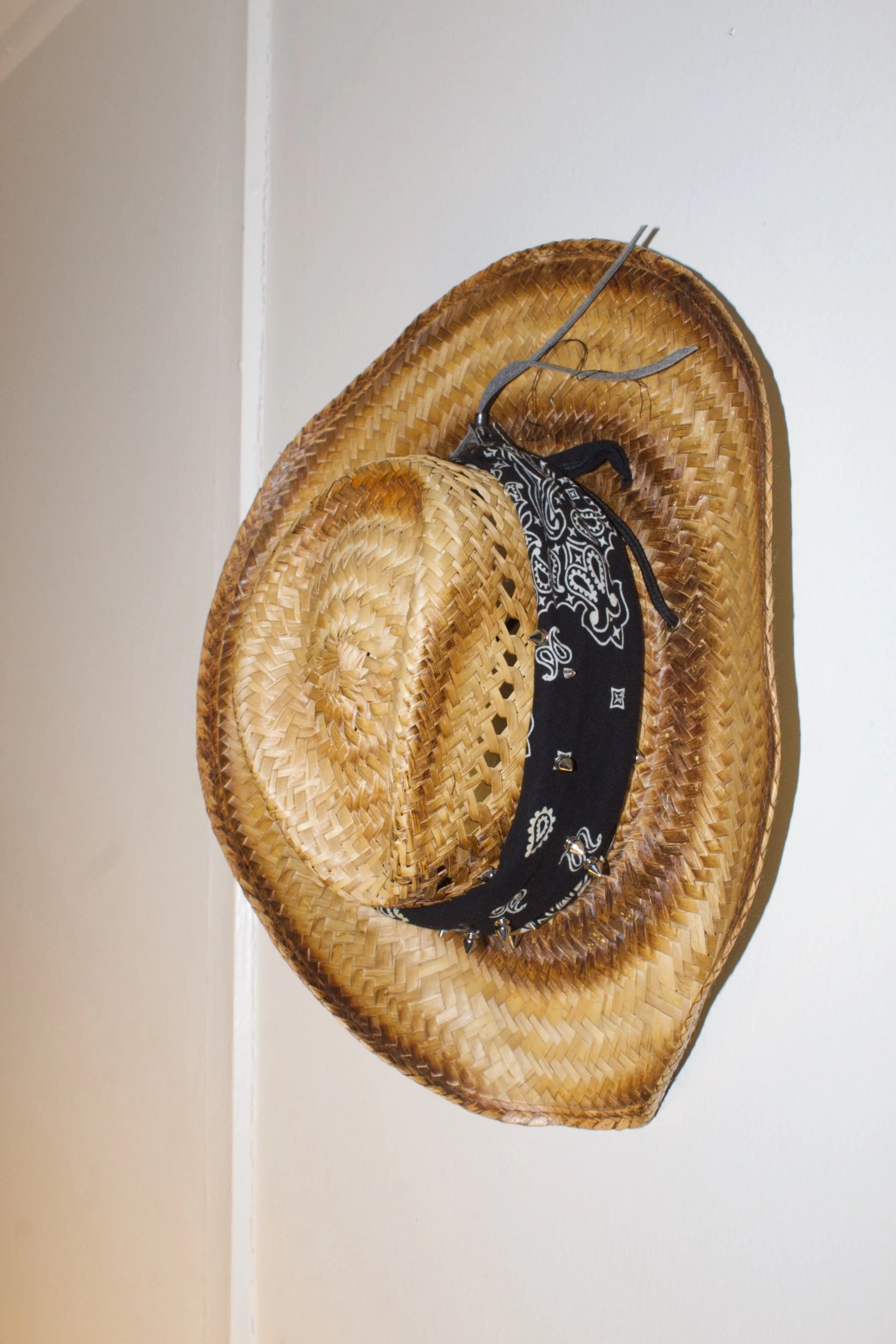
JA - I actually put these up. The hat, I got it straight from Mexico. With the fact that we are Latino, I wanted to emphasize that a little bit more with the decorations in this place… When we started renting this place, it looked a lot different to be honest. I came through, cleaned it up, and was like “What can I throw on these walls? How can I decorate it a little bit?” I brought the hat in, and then Hector got the bandana and added studs to it. It has this punk feeling to it.
Photo courtesy of DOF team.
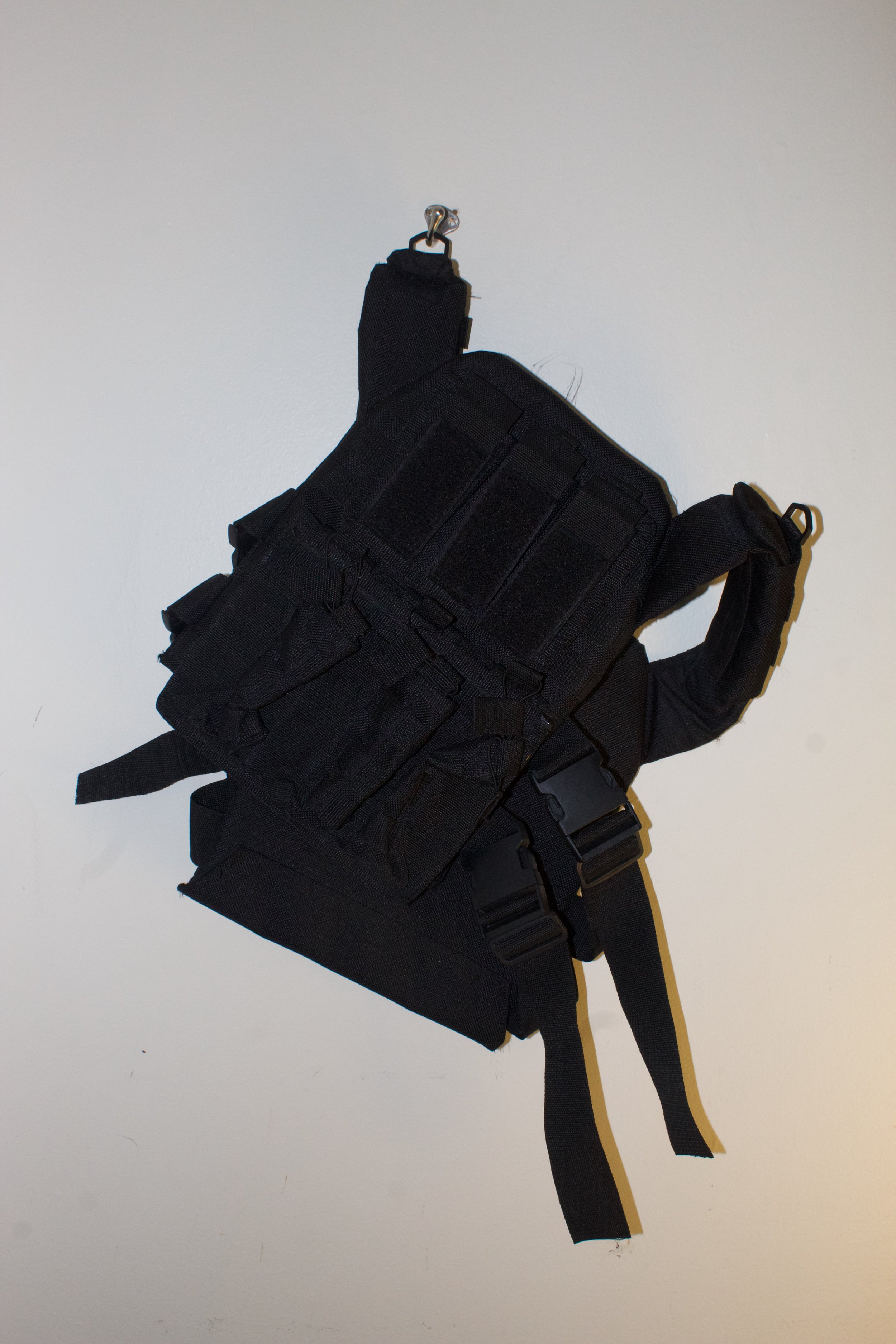
JA - The bullet proof vest Felix actually got for me from El Salvador. I decided to throw it up because we want to feel like an army in a way, we are a movement, and that just enhances that.
Photo courtesy of DOF team.
Was there a specific moment where the brand shifted from an idea into something you knew needed to exist publicly?
Andrade explained that after having their first drop of DOF in 2024 and taking a hiatus from their previous brand, NXGHGMAR3, which did not have the same online presence as DOF now, “That kind of discouraged us a bit, seeing how it went from us feeling like we were on top [with Nightmare] to having to reset and not feeling that same love.”
JA - Our marketing was not really good, our social media presence wasn’t good, our presence even within the community wasn’t that good. Then we were able to get a spot in Bentley University's fashion show in late March 2025. It was kind of a leap of faith, we've never done anything like that before. Hector locked the fuck in and got these designs, he was really working his ass off to get these done.
Once we did the fashion show, it gave us the confidence boost that we needed, like, “Damn, people really fuck with what we’re doing.” We did not have any of this planned out months prior, so the fact that people were admiring the work that was being done on our end, that was when it kind of clicked like, “Oh shit, we were discouraged but now that we can actually do something with this.”
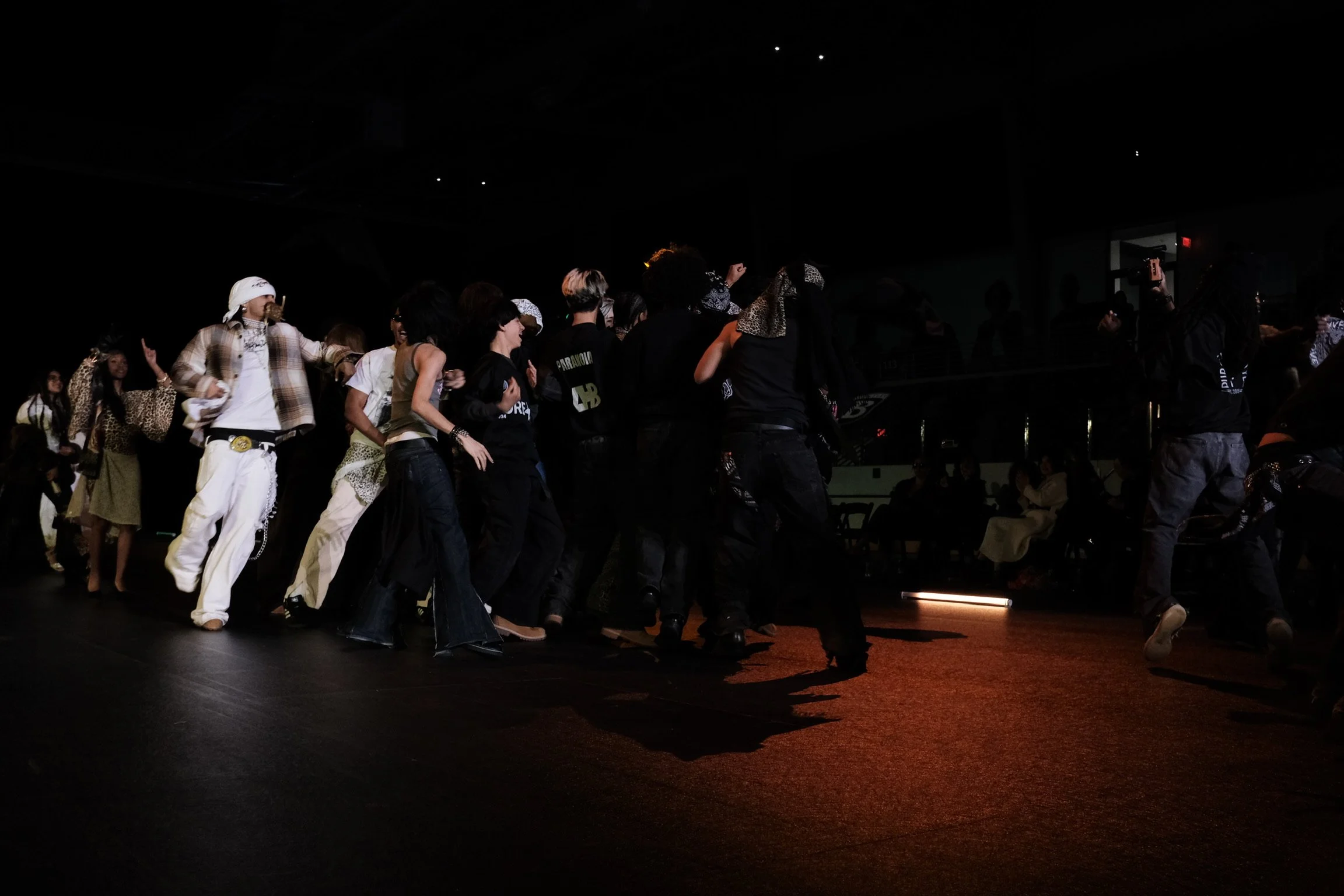
Destroy Our Future models and crew flash mob after presenting for Bentley University’s fashion show, March 2025. Photo courtesy of DOF team.
HR - This is something we’ve built from the ground up. We’ve genuinely built from nothing… That doesn’t make us victims but I feel like it gives us a personal touch. It also makes us vulnerable too. A lot of the art I’m using is stuff that I’ve been producing for the past 3 or 2 years. We’ve already done so much, now it’s about following through. I think that’s ultimately what a business is. There’s so much to choose from, all you have to do is put it in production.
What parts of the process are you most proud of creating?
JA - Once the product comes through fully and all put together, I think it’s very fulfilling to see how it looks on people’s bodies. We’ve been a part of a few fashion shows at this point now, and we’ve been trying to find different ways to play around with the clothing we already have. I have fun being able to style people and see the different ways of working our pieces around.
HR - The most fun I’ve ever had doing this is definitely the styling, the photoshoots, the shows, the parties, and the creative process as well. Doing the research, creating and putting myself in that headspace is very rewarding. When I’m able to just express what I have… It’s very spiritual. Falling in love with the process is probably the best part of it.
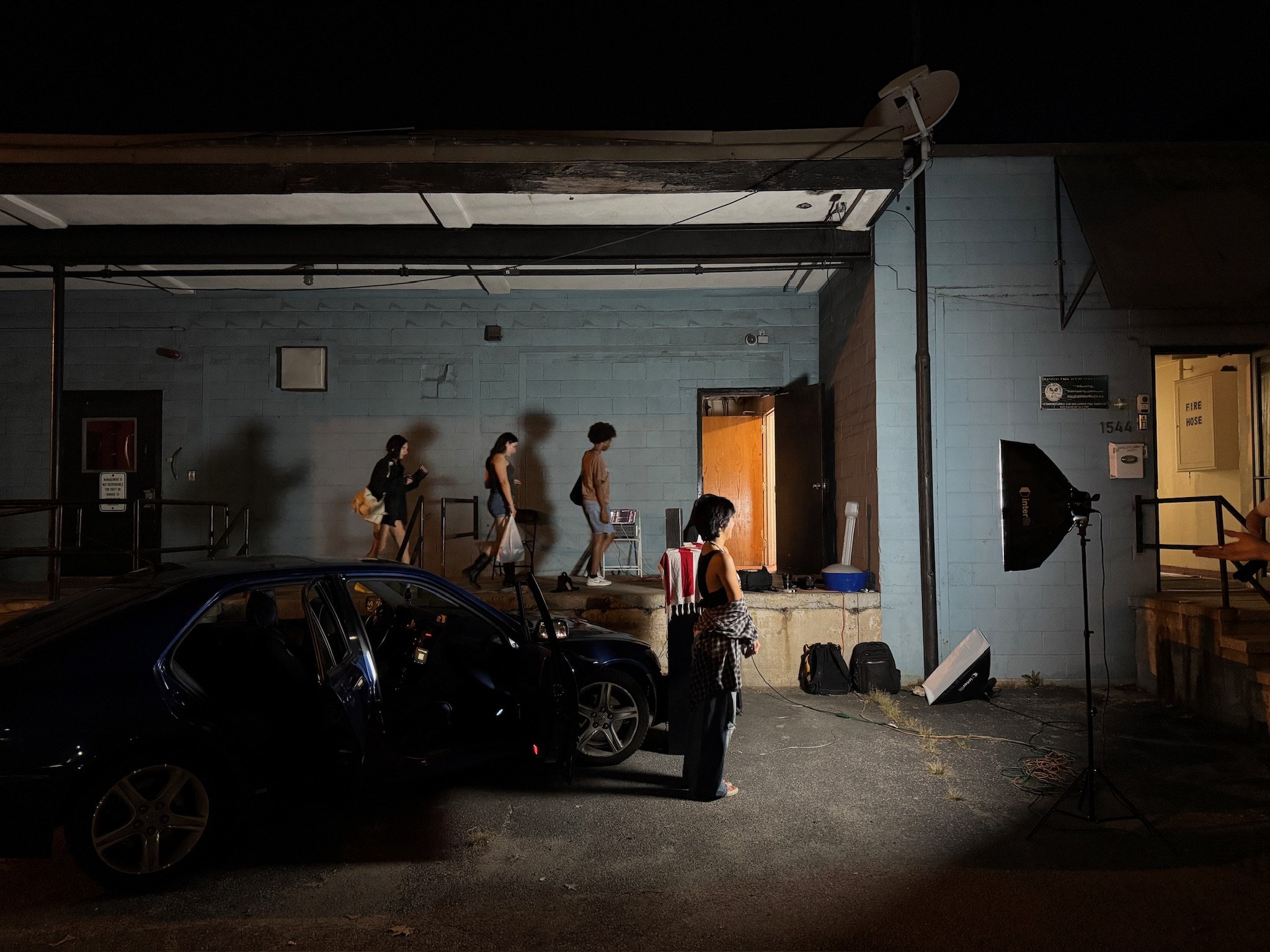
DOF team directing a photoshoot outside of studio, October 2025. Photo courtesy of DOF team.
Where do you see Destroy Our Future evolving?
JA - On the business aspect I’d like for it to eventually be something profitable so that we can provide more because right now this is coming out of our own pockets. If it was to be profitable, there’s a lot more we can do. We want to start hosting more events, whether its galleries, somewhere for local people to network, and expand even nationwide honestly.
“We’re really just babies in the industry and there’s so much for us to do. I definitely see us continuing to grow and expand. ”
HR - I definitely want to do bigger shows, make better clothes, I want to collaborate more with musicians, rappers, artists, producers, influencers. I would love to be a part of ComplexCon, or have some type of placement in New York Fashion Week, even if it’s just a pop up. I want this to be the new pioneer of a cultural shift here in Boston. We are working towards that impact for real. I like to say that the way Paris became the capital of fine art in Europe, Boston will be that for the East Coast. Somehow, someway, and I want to have involvement in that.
“We will have involvement in that. ”
